
Above Japan: A Midnight Climb of Mount Fuji
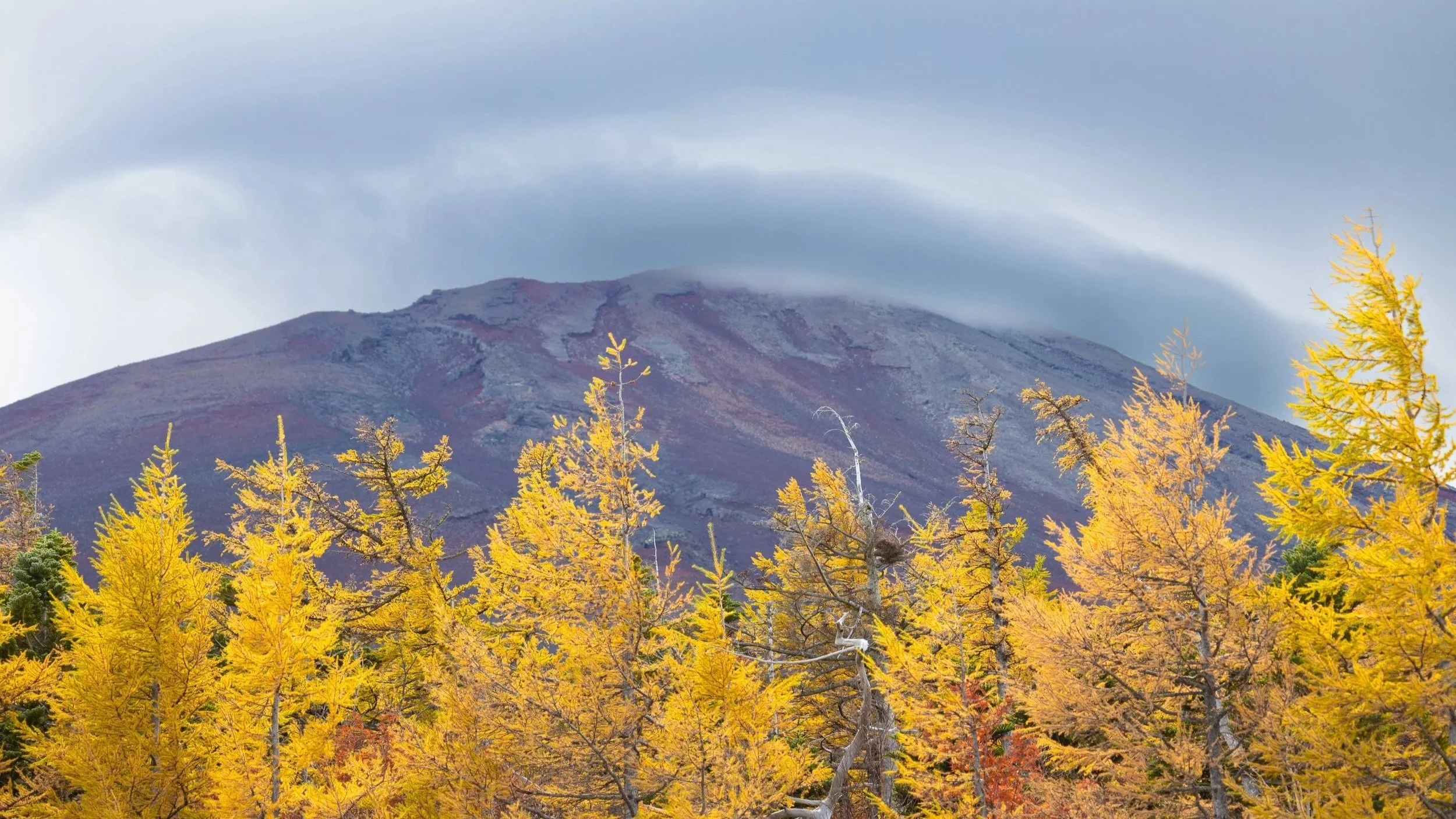
Tokyo never really sleeps, but there are moments late at night when it feels like it does. Streets empty. Trains slow down. Neon signs hum instead of shout. It’s in one of those quiet pockets of Tokyo nightlife, tucked into a narrow alley in Golden Gai, that the idea of climbing Mount Fuji stops being a joke and starts becoming real.
It’s around one in the morning. Dylan and I are sitting shoulder to shoulder at a tiny bar, drinks on the counter, backpacks leaning against the wall. We’re talking to two guys we met earlier that night through a Hostelworld group chat. Their names are Aiden and Dylan too, brothers traveling together just like us. The coincidence feels funny at first. Then it feels inevitable.
We talk about Japan. About where we’ve been. About where we’re headed next. Eventually the conversation lands where it always does for me when I’m in this country.
Mount Fuji.
I’ve wanted to climb it for as long as I can remember. It’s been in the back of my mind the entire trip. The problem is logistics. It’s off-season. No buses. No rental car. No international driver’s license on our end. It’s the kind of idea you bring up knowing all the reasons it probably won’t work.
Except this time, it does.
Aiden casually mentions that they do have an international driver’s license. Someone pulls out a phone. We check rental car availability. There’s a pause. Then a tap. Then a confirmation screen.
The car is booked.
That’s the moment everything shifts. The laughing quiets down. The adrenaline spikes. We look at each other knowing that this isn’t just talk anymore. If we’re doing this, we’re actually doing it.
We celebrate for a few minutes, but not for long. Someone says it out loud. This bar is the last bar. If we’re going to climb Fuji, we need sleep. We need to be smart. Off-season means no rescue teams. If something happens up there, it’s on us.
No one hesitates. No one backs out.
We leave Golden Gai knowing exactly what we’ve committed to.
The next day, the car becomes our world.
We drive everywhere. Around Tokyo Bay. Over massive bridges. Through long tunnels that feel like they go on forever. At one point we’re standing beneath towering infrastructure, the lowest point in Japan. Less than twenty-four hours later, we’ll be standing at the highest.
By early evening, we’re exhausted. We eat, organize layers, set alarms. Dylan and I lie down around six p.m. and close our eyes knowing it won’t be for long.
At eleven p.m., the phones buzz.
At midnight, headlights pull up outside.
Tokyo is silent as we leave.
The drive to Mount Fuji feels unreal. The city lights fade. Roads empty. No music plays. No one talks much. The car hums through the dark while we nap in pieces, wrapped in base layers and long johns.
We stop at a 7-Eleven near Fujioka. Fluorescent lights. Hot snacks. Candy. Onigiri. This is where it starts to feel real. This is the last convenience store before the mountain.
By the time we reach Subaru Station 5, it’s just after three in the morning.
The parking lot is empty.
We step out of the car into cold air and darkness. Breath fogs instantly. There’s no hesitation, no nerves. Just excitement. We stretch. We laugh quietly. I lead a quick warm-up. Headlamps click on.
We start walking.
Thirty minutes later, we reach the real trailhead. A tall yellow fence blocks the path. Signs warn us not to continue. Closed. Off-limits. No entry.
We stand there for a moment, looking at each other.
There’s only one way forward.
One by one, we climb over the fence and drop onto the trail on the other side. The mountain accepts us without comment.
The climb is relentless.
Loose volcanic gravel. Endless switchbacks. Every step slides back half a step. The elevation gain stacks up fast. Five thousand five hundred feet doesn’t sound real until you feel every single one.
The first hour we talk. After that, the mountain quiets us.
We move as a group, adjusting pace, waiting for each other. Dylan struggles at times. We slow down. No one rushes. There’s no clock except daylight. We only have to make it up and back down before sunset.
Out of the darkness behind us, a headlamp grows closer.
A woman catches up and passes us like the slope barely exists.
We stop her immediately.
Her name is Carmen. She’s Swedish. She’s traveling solo. She’s been living out of her van in Japan for months, hiking mountains the way some people go grocery shopping. She’s fully geared, calm, confident, and exactly the kind of person you trust instantly.
She doesn’t take over. She doesn’t lecture. She just stays with us.
From that point on, the group feels complete.
By late morning, the sun breaks over the horizon. The cold eases. The sky opens up. Clouds sit below us like an ocean.
We reach the summit around ten a.m.
The view is endless. Tokyo in the distance. The coastline far away. The world stretched thin beneath our feet.
We could turn back, but Carmen tells us about the crater loop.
So we do the whole thing.
We walk the rim. We reach the weather station. We sit for over an hour eating snacks, laughing, soaking it all in. No wind. No snow. Perfect clarity.
It doesn’t feel real.
The descent is brutal.
Loose gravel destroys our knees. The switchbacks feel longer going down than they did going up. But this is where the silence breaks. We talk the entire way. Stories. Jokes. Life. Plans. The kind of conversations that only happen when everyone is exhausted and happy at the same time.
By the time we reach the bottom, it’s been twelve hours on the mountain.
Carmen’s van is parked nearby. Perfect timing.
We hug. We promise to cross paths again.
That night, we eat ramen back in Tokyo. The city feels louder now. Brighter. Alive again.
It’s Halloween.
We go out.
Because of course we do.
We climbed Mount Fuji in the dark. We stood on top of Japan. And somehow, the city is still waiting for us when we get back.
Some trips give you moments.
This one gave me a peak.