
Peru
By Sebastian LaTorre
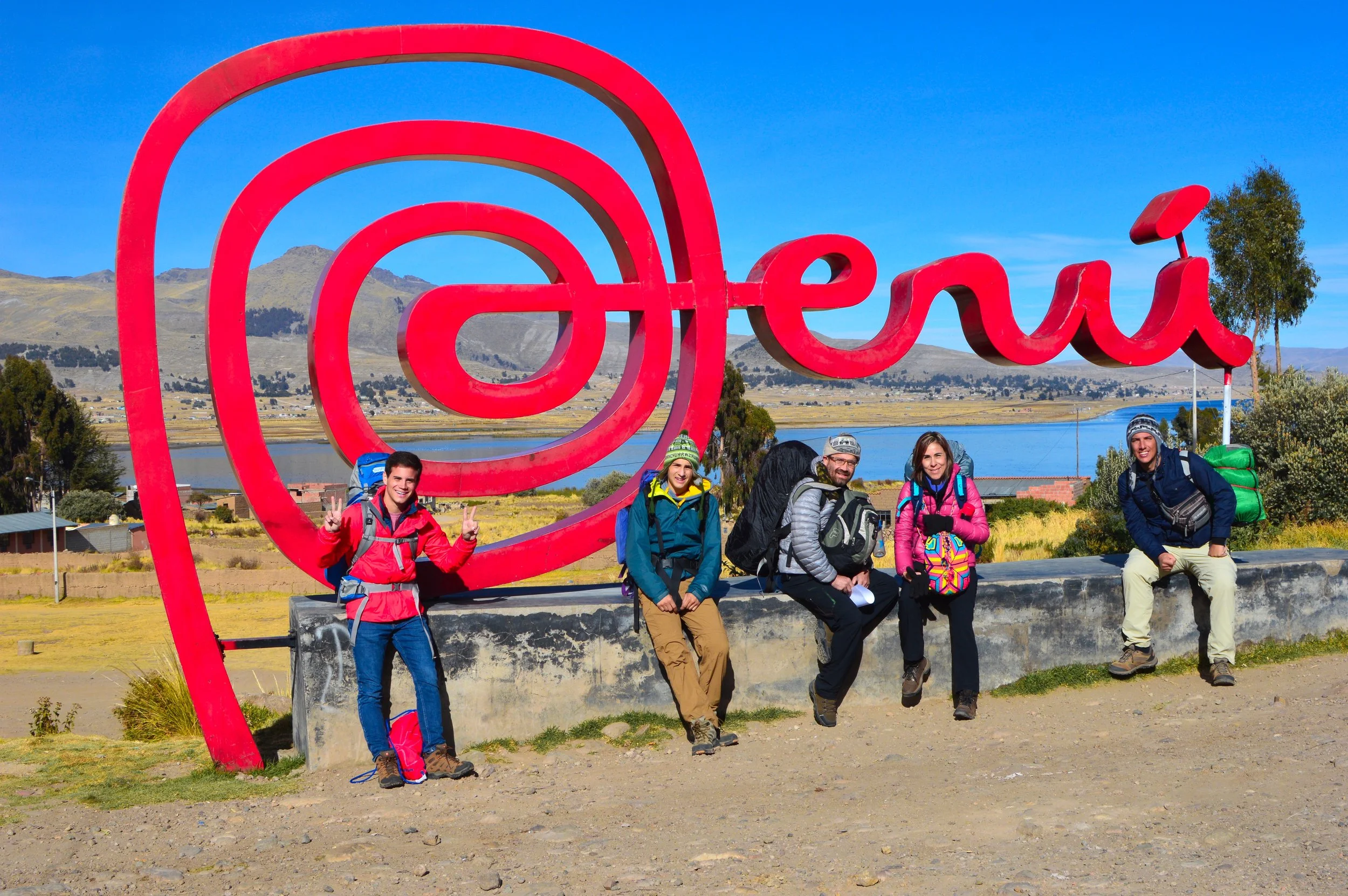
Peru: Surfing the Andes
Peru was my first real taste of the world.
I was fourteen years old, standing in Lima with a backpack, a camera, and more excitement than fear. It was my first true international backpacking trip and from the moment we arrived I knew this journey would be different from anything I had experienced before. I felt free, capable, and completely alive.
I had just finished eighth grade and was about to start my freshman year of high school. I flew into Lima with my brother Sergio and met the rest of my family there for a three week adventure through Peru, Bolivia, and Chile. I was the youngest by far, but I never felt held back. If anything, I felt pushed forward by curiosity and a deep desire to see as much as possible.
Lima and the Beginning of Independence
Arriving in Lima felt electric. I was ecstatic in a way only a teenager on the edge of something new can be. I was not nervous. I did not overthink the plan. I trusted that all I needed to do was show up, speak Spanish, and lean into the experience.
This was the first time I was fully responsible for communicating in another country. I spoke directly with locals, ordered food, asked questions, and navigated moments on my own. It made me feel independent in a way I had never felt before. I wanted to prove that I belonged on this trip with adults who had far more life experience than me.
Physically, I felt strong. While others struggled with altitude sickness as we climbed higher into the Andes, I felt energized. Looking back, I think it was not just youth that carried me through but a genuine hunger for adventure.
On the Road Through the Andes
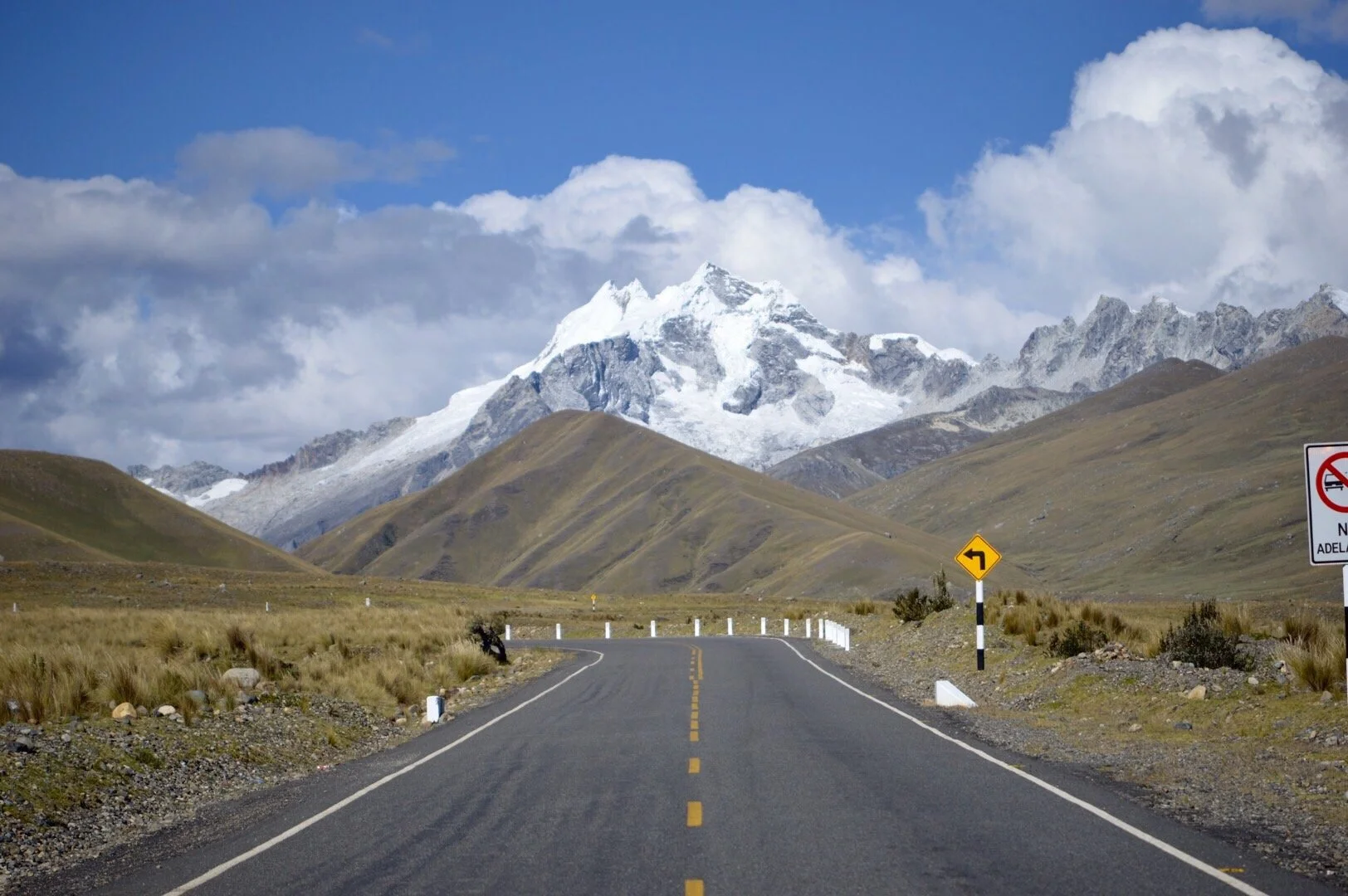
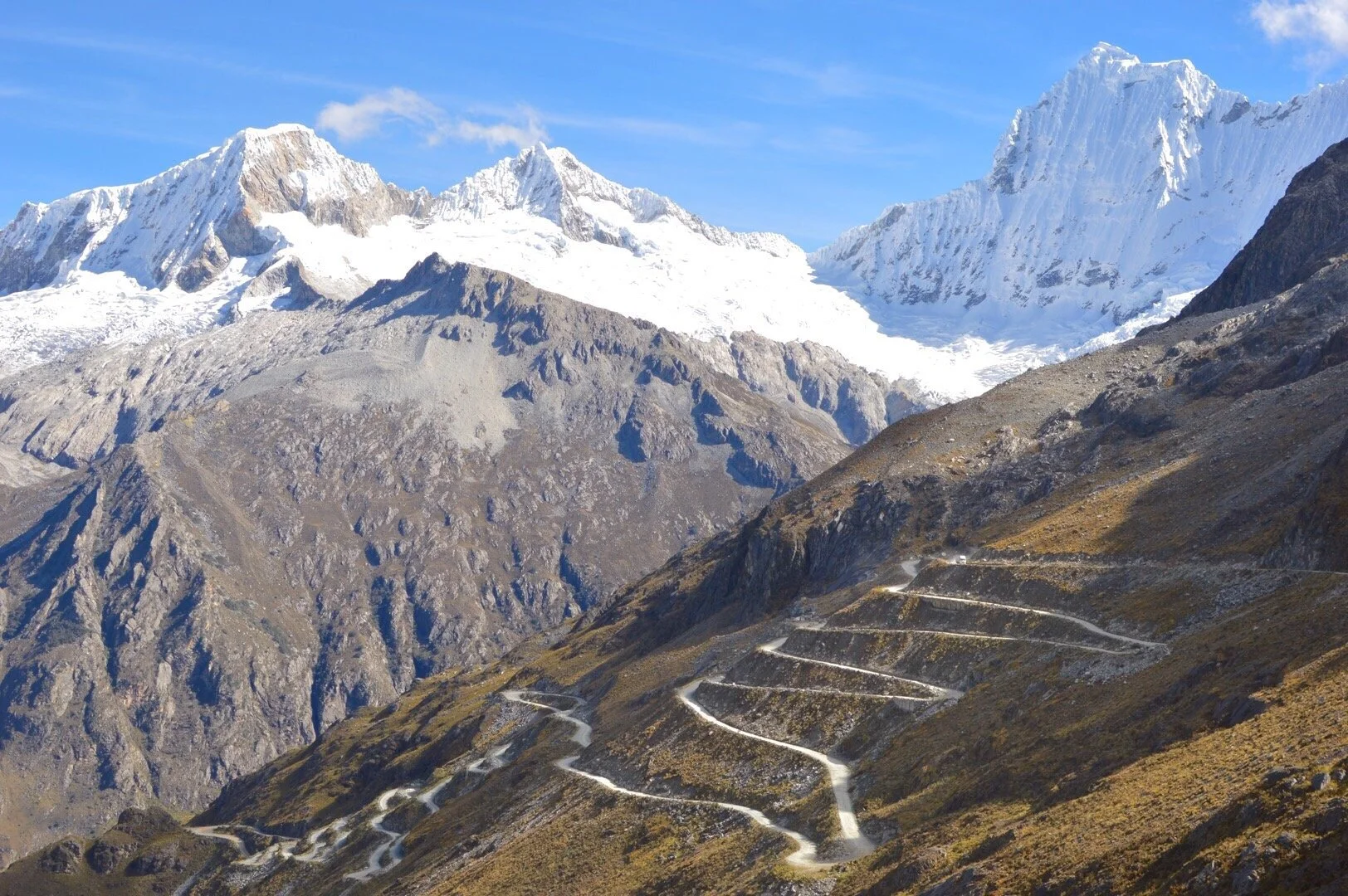
Traveling through central Peru by car shaped the soul of the trip. We rented a vehicle and began exploring the country at our own pace. Huascaran National Park was one of the first places that truly took my breath away. The mountains were massive, jagged, and impossibly dramatic. Snow covered peaks rose above green foothills and alpine lakes reflected the sky.
At some point, my family told me something that changed everything. They said Sebastian if you think we should stop for a photo then tell us to stop. From that moment on, I became the group photographer. I sat in the middle seat, scanning the horizon, asking the driver Mauricio to pull over whenever the light or landscape felt right. We would jump out of the car and stand quietly in front of scenes that felt unreal.
One of the most memorable drives took us through Huascaran and El Cañon del Pato on the long route back to Lima. The road cut through towering mountains and deep canyon walls. At one point we nearly ran out of gas and had to coast downhill to avoid stalling. We ended up paying far too much for fuel in the middle of the national park, laughing and relieved all at once. It was stressful and perfect and exactly what travel should feel like.
We drove above five thousand meters more than once. When someone needed to stop because they felt sick, I would jump out of the car and run into the mountains, completely overwhelmed by the beauty around me. To help with the altitude, we drank coca tea made from coca leaves, a traditional method locals use to acclimate. It became part of the rhythm of the journey.
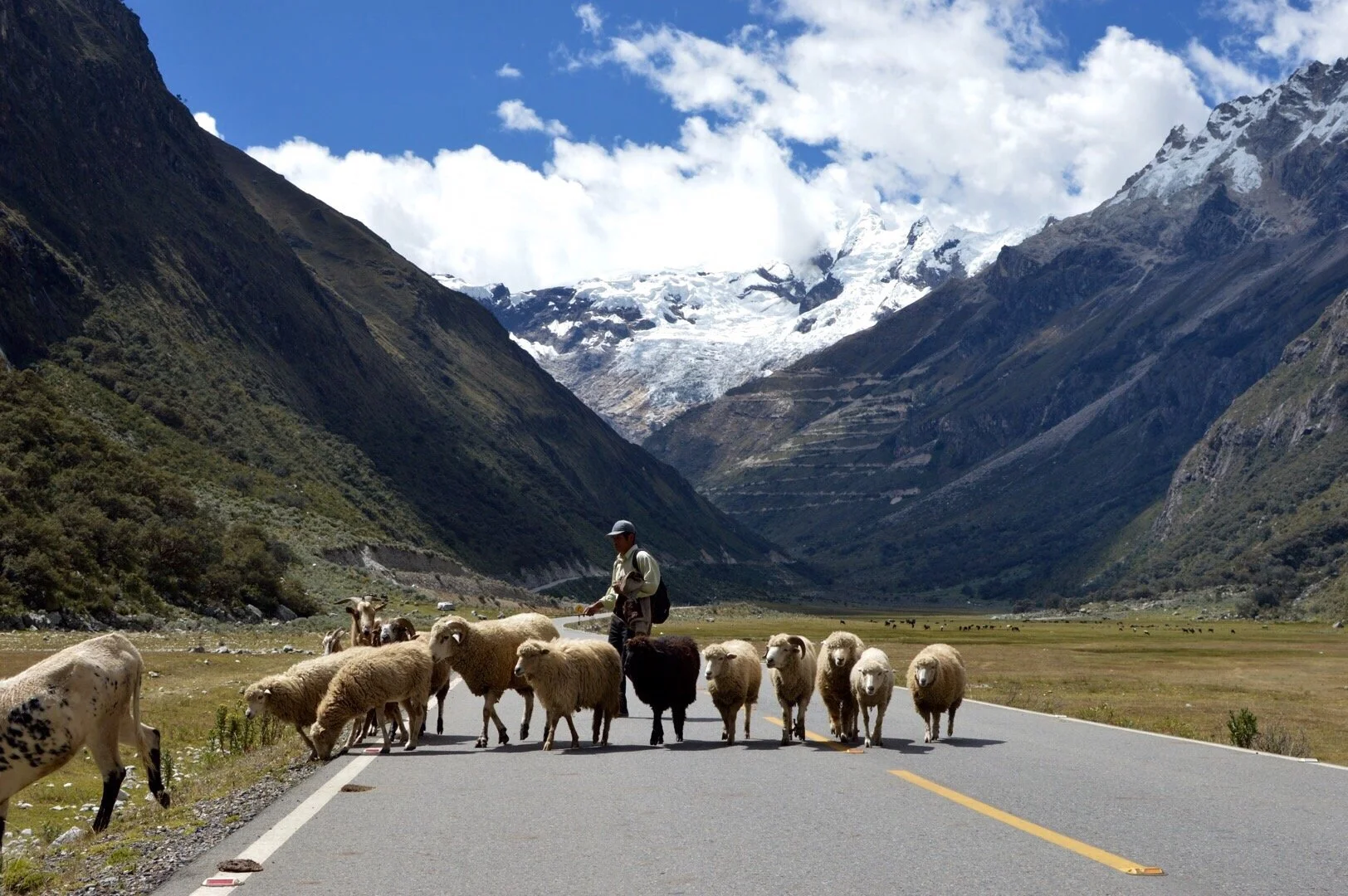
Somewhere on a long flat road surrounded by towering peaks, I asked the car to stop. We spent nearly forty five minutes standing in the street taking photos of the entire group with the Andes stretching endlessly behind us. That was the moment I knew why I had brought my camera. I felt grateful and privileged to witness a landscape so powerful and I wanted to share it with others. Those images still surprise me today.
Sacred Valley and Machu Picchu
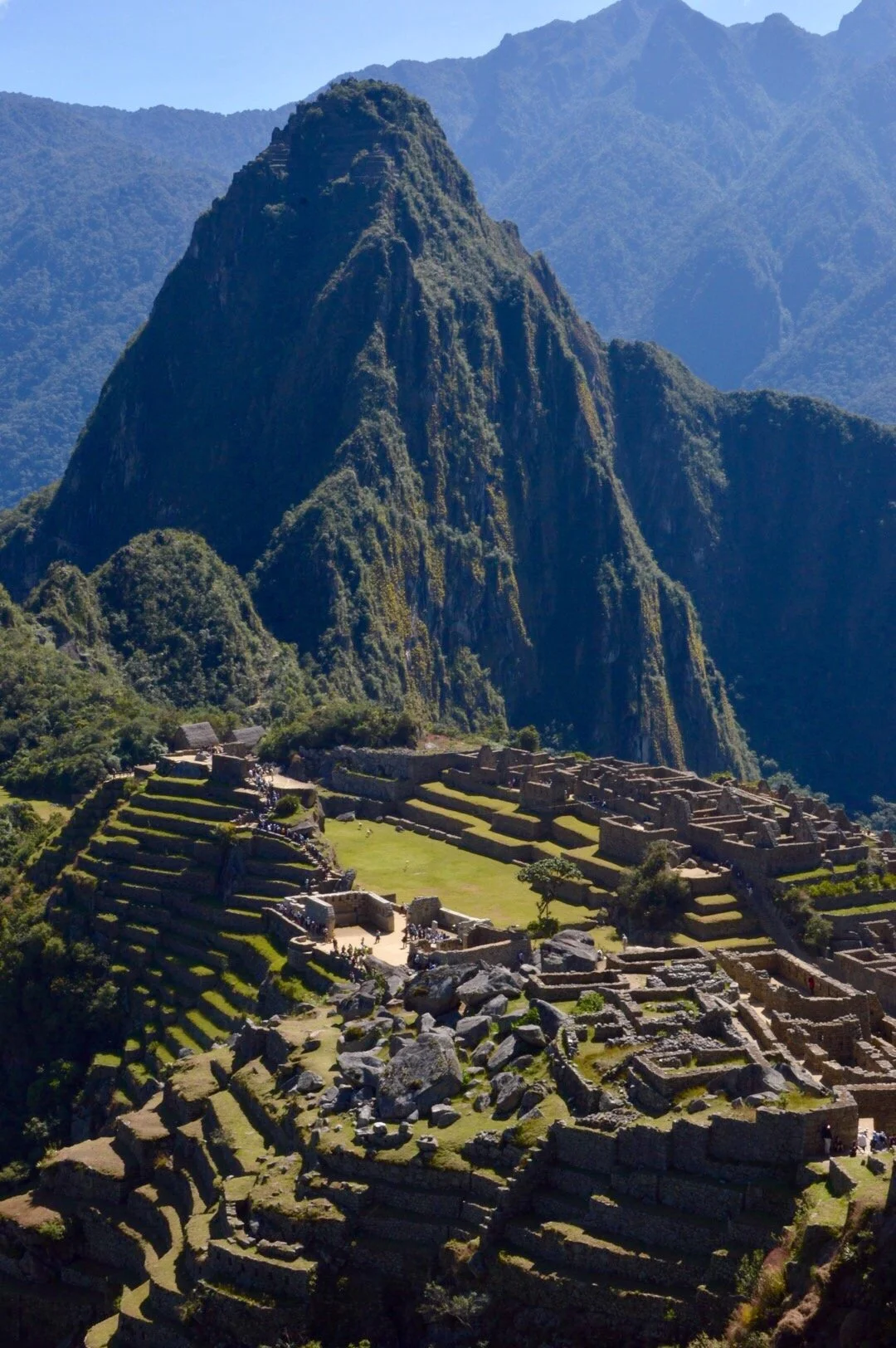
Machu Picchu was one of the most exhausting days of my life.
We thought the journey would be simple. It was not.
Instead of an easy train and bus, we found ourselves packed into a rough van driving along narrow roads carved into sheer cliffs. The five hour drive from Cusco to the hydroelectric plant was intense. From there, we walked ten kilometers along a train track to reach Aguas Calientes. By the time we arrived, we were exhausted.
The town felt like a Peruvian Gatlinburg. Busy, chaotic, and packed with travelers. We rested briefly before waking up early the next morning to hike straight up the mountain in darkness. Hundreds of people moved in a slow line, drenched in sweat, climbing steep steps for over an hour until we finally reached Machu Picchu.
The altitude was manageable, but the humidity, crowds, and exhaustion made it difficult to fully appreciate the site at first. Eventually, the reality of where we were set in. Even through the chaos, I was grateful to be there.
One of my favorite memories from the Sacred Valley was not Machu Picchu itself, but a quiet moment near an old church decorated in gold. Photography was not allowed inside, but outside the sun was setting over a potato farm. Locals had laid potatoes out on the grass to dry, glowing warm in the evening light. It was peaceful and deeply beautiful.
Lake Titicaca and Puno
Lake Titicaca felt completely different from anywhere else we visited.
In Puno, we visited floating villages built from dried reeds. The homes, boats, and walkways all floated on the water, constructed from layers of grass. Families moved between villages by boat and lived in a way that felt entirely self contained.
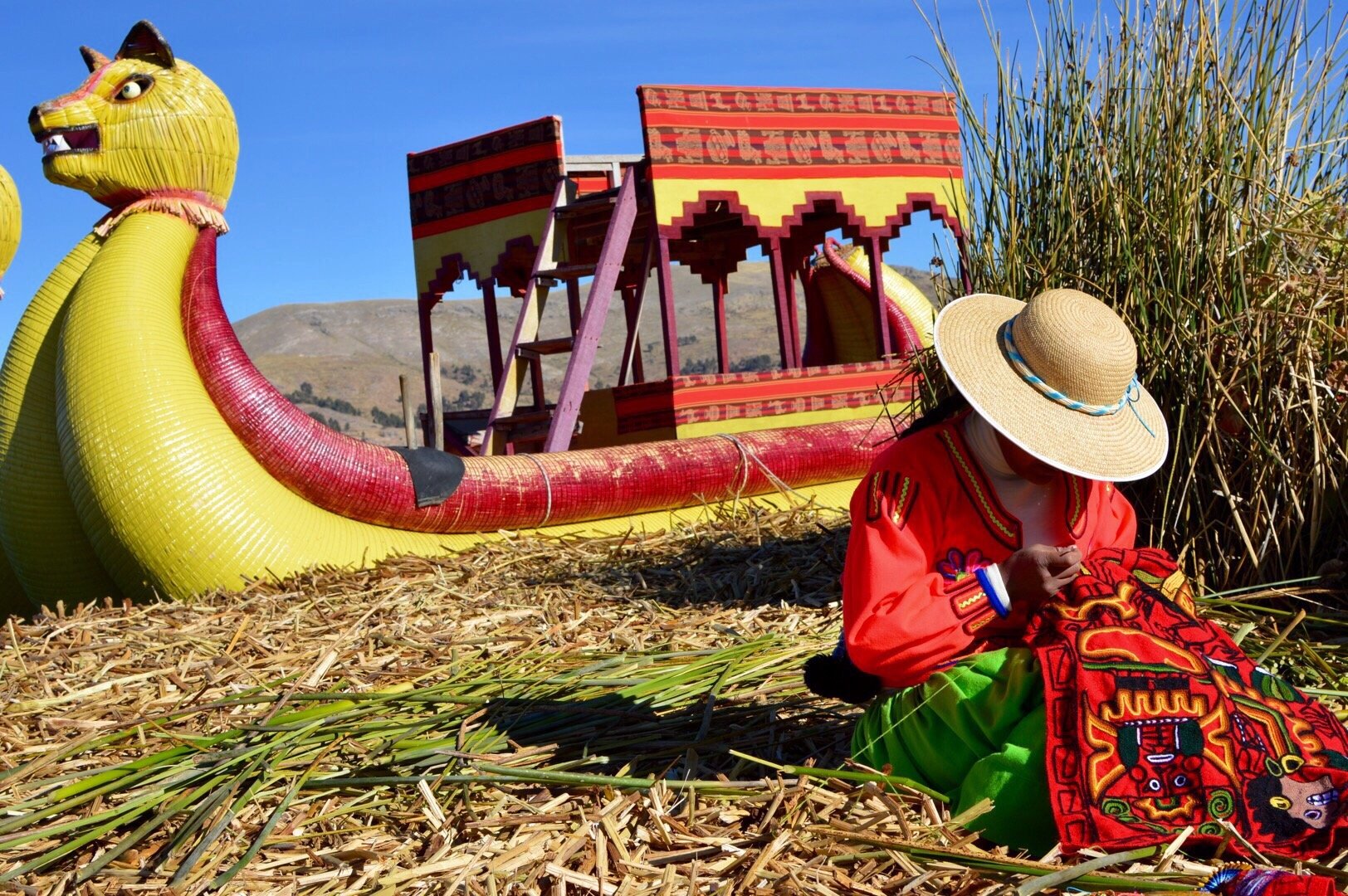
A woman in traditional Andean clothing sits on the floating reed islands of Lake Titicaca, hand stitching colorful textiles beside a bright woven reed boat. The scene reflects daily life, craftsmanship, and cultural tradition in the high Andes of Peru, surrounded by clear blue skies and golden reeds.
Being welcomed into their homes was humbling. As a fourteen year old, seeing a completely different way of life opened my eyes in a lasting way. It reminded me how many ways there are to exist in the world.
Arequipa and the Pull of Adventure
Arequipa was where my love for adventure truly ignited.
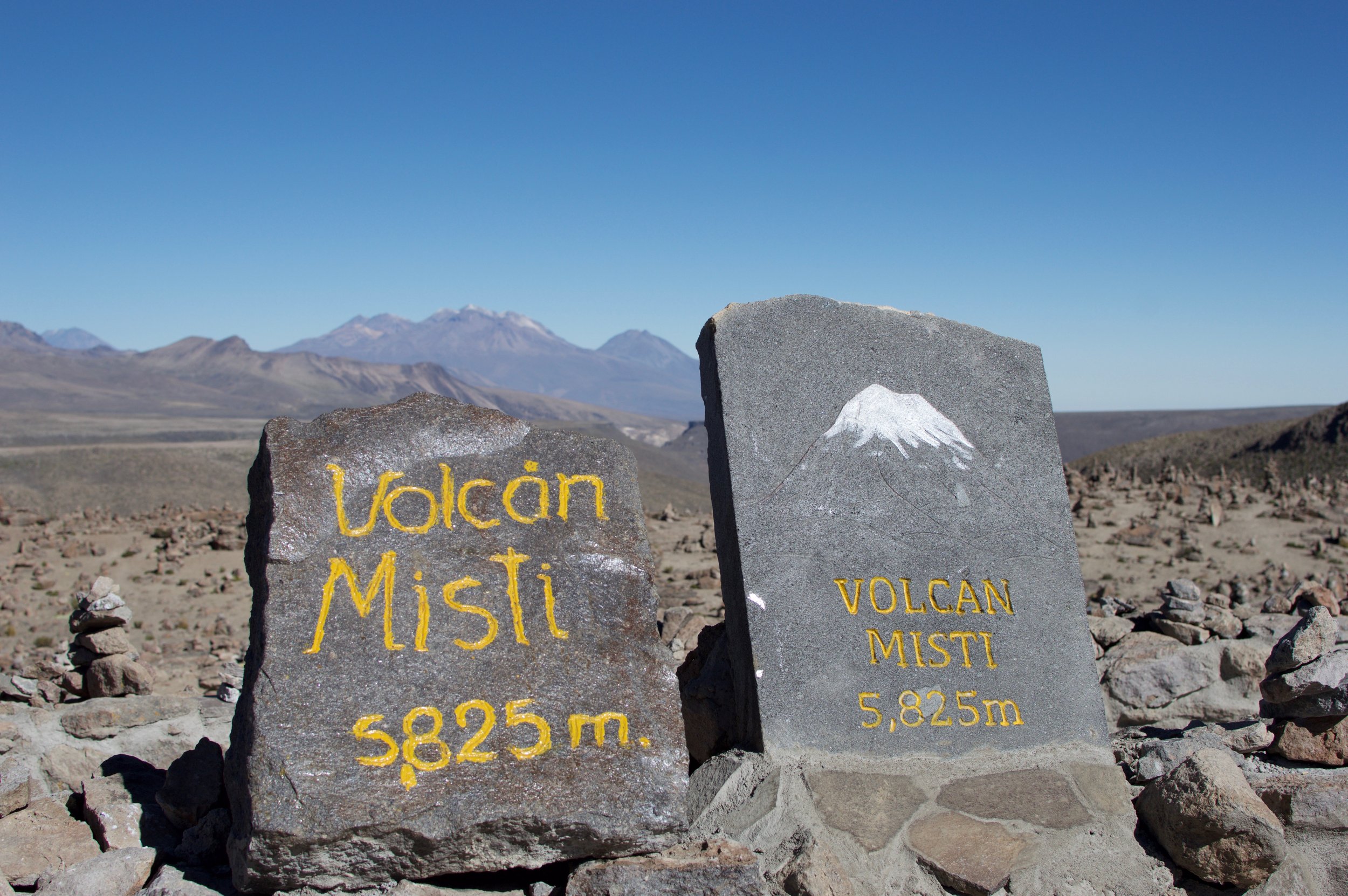
After hearing stories from other travelers about a nearby volcano called Mount Misti, my uncle and I decided to attempt the climb. That experience deserves its own story and I will tell it one day.
Although I did not summit, the attempt itself changed me. It was physically demanding, mentally challenging, and deeply rewarding. Hiking with a guide and a group of French climbers after my uncle turned back forced me to step into independence in a way I had never experienced before. I grew in that moment and I still feel connected to it.
Stone markers at the base of Volcán Misti near Arequipa, Peru, painted with the volcano’s name and elevation at 5,825 meters. The stark volcanic landscape stretches toward distant Andean peaks under a clear blue sky.
Colca Canyon and the Condors
We reunited with the rest of the family at Colca Canyon.
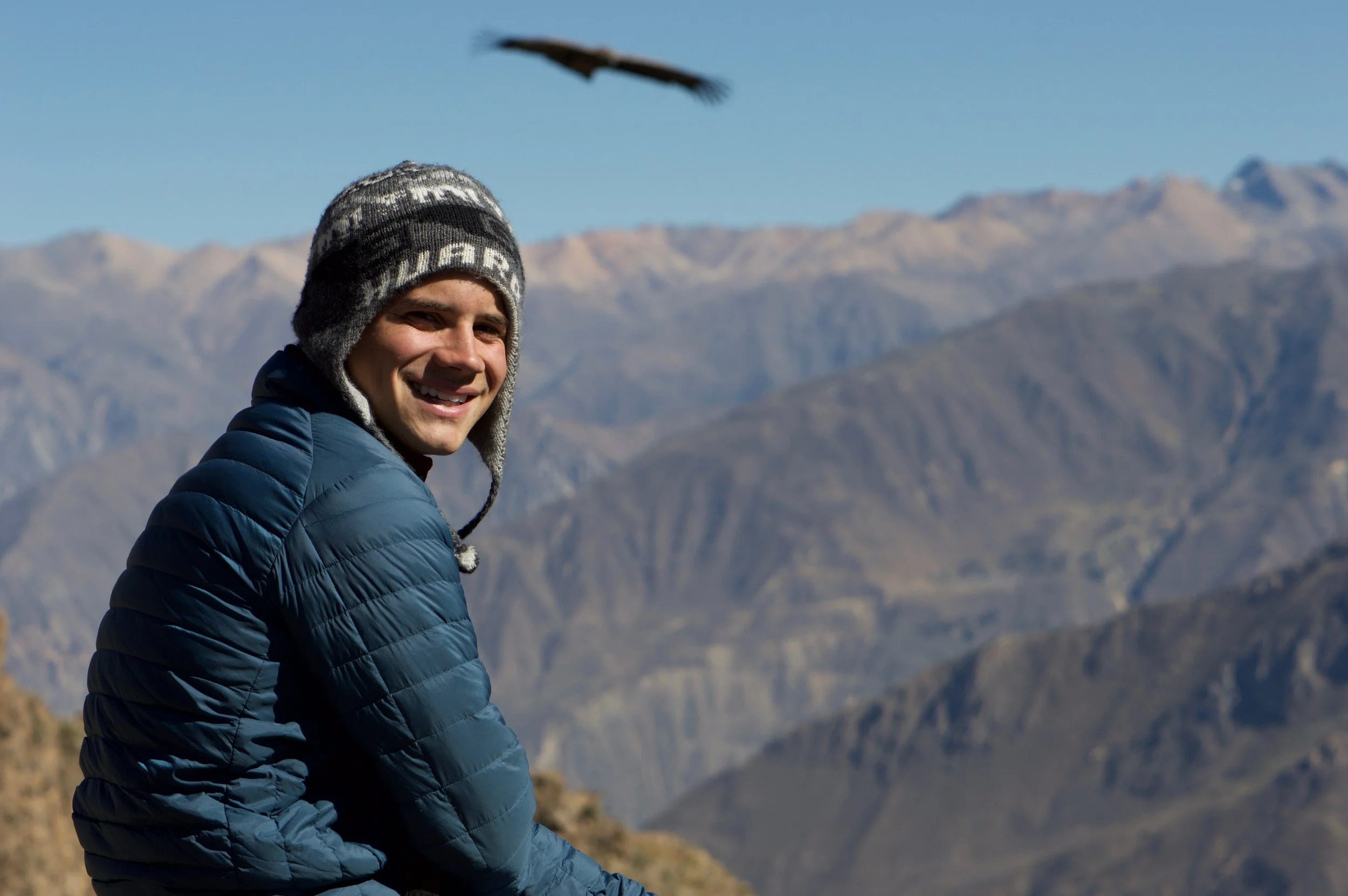
Seeing Andean condors soaring above the canyon was unforgettable. These massive birds moved effortlessly through the air, riding thermals above one of the deepest canyons in the world.
My dad had always talked about condors and how grand they were. Seeing them in person felt meaningful. The canyon stretched endlessly and the silence of the space made the moment even more powerful.
Sergio stands at the edge of Colca Canyon in southern Peru, smiling as an Andean condor glides overhead. The vast canyon walls stretch into the distance, capturing the scale and wild beauty of one of the deepest canyons in the world.
What Peru Gave Me
Looking back now, I am incredibly grateful that I experienced Peru at such a young age. It showed me what international travel could be. It taught me independence, curiosity, patience, and appreciation for the world beyond my own.
Peru is a place I still feel deeply connected to. I recommend it often. It is safe, beautiful, rich in culture, built for travelers, and filled with landscapes that feel almost unreal. The food, the people, the mountains, and the quiet moments on the road all shaped who I became.